Central Otago grows wine at altitude, on schist and clay that most winemakers elsewhere wouldn’t risk. The region splits into six sub-regions, each with its own personality, and no single day can do justice to all of them. A full-day Central Otago wine tour focuses on three: Gibbston, Cromwell, and Bannockburn.
Along the way, you walk through New Zealand’s largest underground wine cave, sit down to a five-course lunch cooked in retired oak barrels, and, if the day allows, spend time in Old Cromwell or Arrowtown. Guests often tell us they come away feeling they’ve spent the day inside the region itself, down by its rivers and in its kitchens.
Three Sub-Regions, One Day
Taste a Gibbston Pinot Noir and a Bannockburn Pinot Noir an hour apart, and the difference is hard to miss. Each of Central Otago’s six sub-regions answers to its own soil and its own weather.
Gibbston
Gibbston sits higher and cooler than the others, folded into the gorge along the Kawarau River. It’s known for structured Pinot Noir with real backbone.
The Cromwell Basin
The Cromwell Basin runs warmer. Lake Dunstan moderates the temperature here, and the fruit ripens differently as a result.
Bannockburn
Across the basin, Bannockburn holds some of the region’s oldest vines on schist-heavy slopes. Most guests notice the minerality in these wines within the first sip, often before we’ve explained where it comes from.
We visit all three sub-regions on every tour. Tasting Central Otago properly means tasting the differences between them side by side, in the same afternoon, while each glass is still fresh in your memory, so that’s how we built the route.
Four Vineyards Across Three Sub-Regions
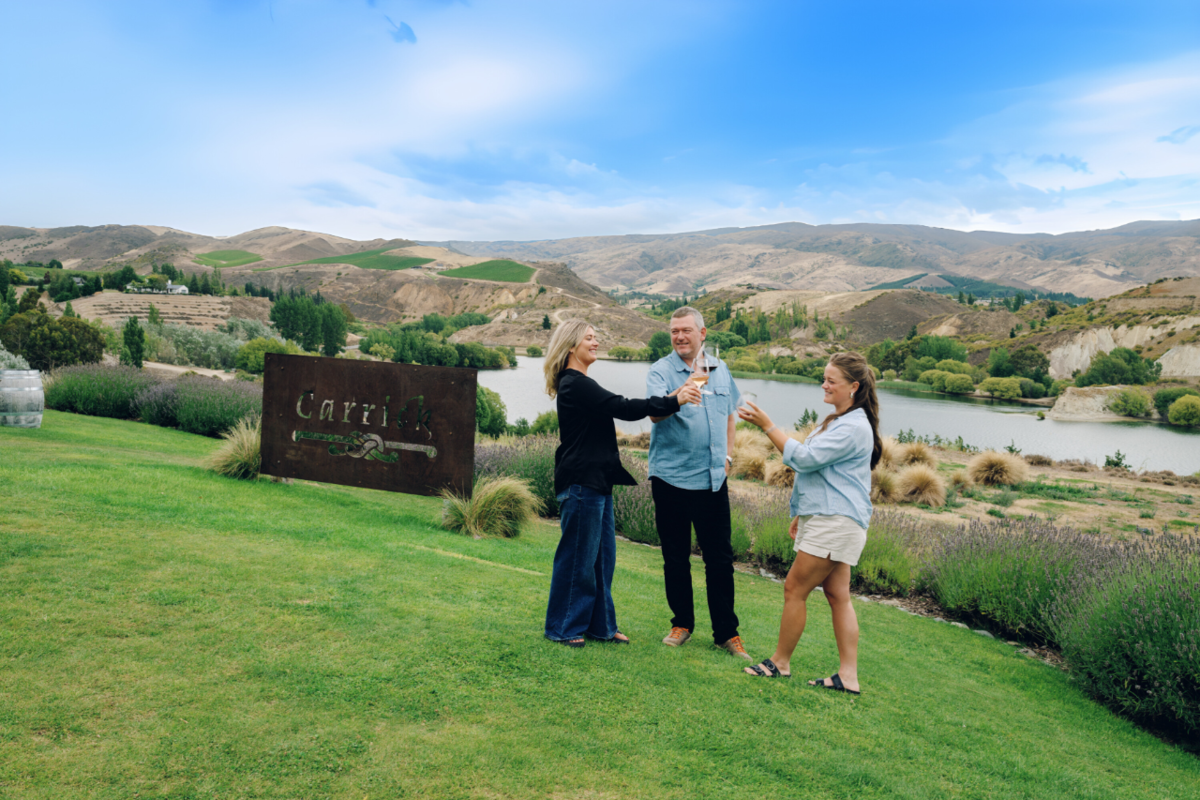
Taste your way through Gibbston, Bannockburn, and Cromwell in a single day, with cool-climate wines from four boutique vineyards. You’ll see how much the landscape and the glass change from one sub-region to the next. Lunch is a platter of local produce with a flight of wines at Carrick Winery & Restaurant. If the weather allows, you’ll also walk through the historic settlement of Old Cromwell. The whole way, your guide shares stories about the region’s pioneers and how its wine country took shape.
What’s included
- Return hotel transfers
- Tastings at four premium vineyards in Gibbston, Bannockburn, and Cromwell
- Platter-style lunch with a wine flight at Carrick Winery & Restaurant
- A stroll through Old Cromwell (weather permitting)
- Full commentary on the region’s sights, wine, and history
Check availability and book your Central Otago wine tour →
Inside the Gibbston Valley Wine Cave
There’s a particular hush to tasting wine underground, with the barrels close and the daylight gone.
The Gibbston Valley wine cave is the largest underground wine cave in New Zealand, and one of the day’s tastings happens inside it. A guide leads you through, explains how the cave is used, and pours as you go. The walk and tasting take 30 to 40 minutes. It’s a very different way to taste wine than standing at a cellar door counter.
Age Restriction for the Cave
Anyone under 17 isn’t permitted inside the cave. On shared tours, children stay at the Gibbston Valley Winery cellar door with the guide while parents or caregivers go through. On private tours, we can arrange a cellar door tasting instead, or swap Gibbston Valley Winery for another vineyard entirely if that suits your group better.
The Stoaker Room: Lunch Cooked in Wine Barrels
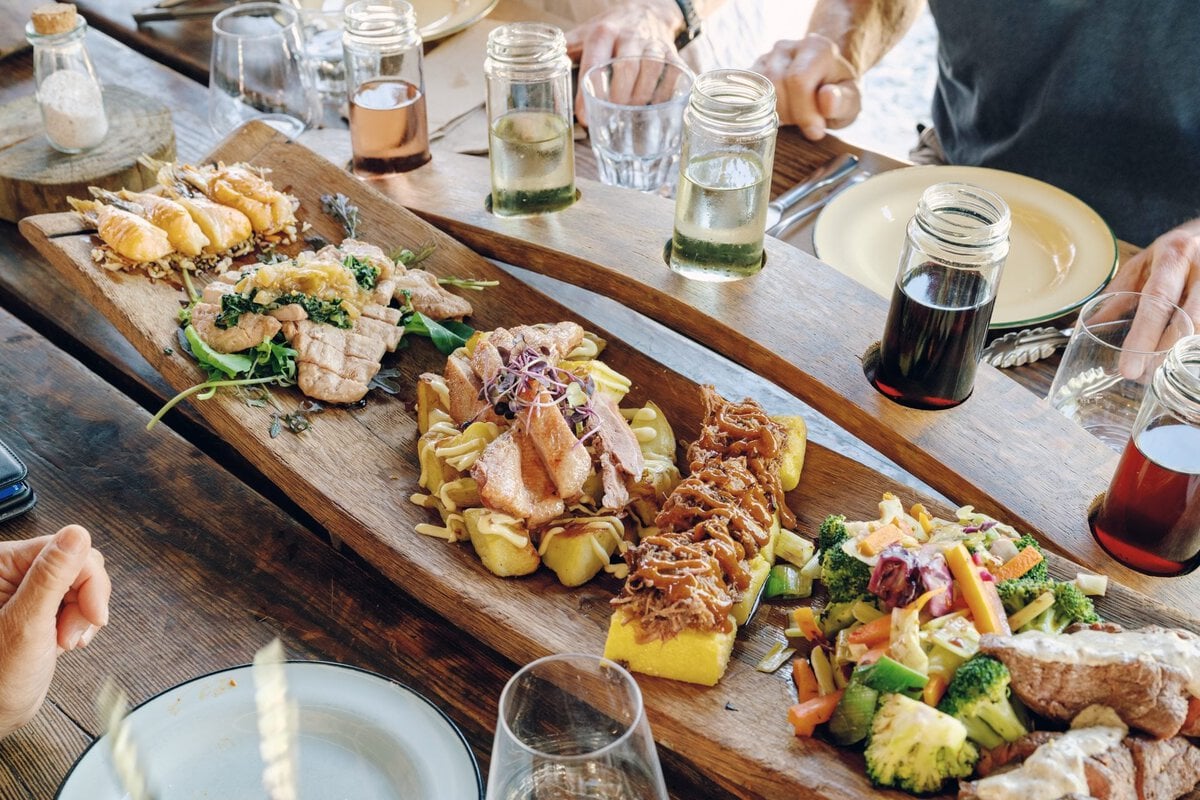
Lunch happens at The Stoaker Room in Cromwell, and it’s built around a genuinely unusual technique: the meats are cooked in retired oak wine barrels. It’s five dishes, five matched wines, and the pairing is deliberate rather than decorative. Across the year, the plates can include venison, goat, duck, pork, and salmon, and each one lands next to a wine chosen specifically for it.
What makes this stand out isn’t just the barrel cooking, though that alone is worth the seat. It’s that the lunch is included. A lot of wine tour operators in the area treat food as an optional extra you book separately, if you book it at all. We build it into the day from the start, because a five-course lunch matched wine by wine is where a lot of guests do their real learning about what they actually like.
That learning shows up in strange ways sometimes. We had a guest recently who opened the day insisting he didn’t like white wine, full stop. By the end of lunch he’d changed his mind entirely and was already asking about booking a private tour to try more whites. That’s not an unusual outcome. Wines taste different next to food than they do standing alone at a tasting bench, and Central Otago’s cooler-climate whites in particular surprise people who think they know their own palate.
Old Cromwell and Arrowtown
In autumn, the trees along Arrowtown’s main street turn orange and yellow, and the van goes quiet for a minute.
Time permitting, the day includes a stop in Old Cromwell or Arrowtown. Both carry real pioneering and gold mining history. Arrowtown’s gold rush past includes its old Chinese Settlement, and our guides are happy to walk you through that story if there’s time.
On the drive between stops, we point out landmarks most self-guided visitors miss entirely — the Edith Cavell Bridge and Queenstown Hill among them — along with stretches of the Kawarau River.
How the Seasons Change the Drive
Spring brings young lambs and deer in the fields between vineyards, and the first blossom on the trees. Summer often means long golden light over the schist slopes well into the evening. Autumn is when the vines turn and the landscape earns its reputation for colour. Winter is stark and quiet, with frost on the ground and a clarity to the air that makes the mountains look closer than they are. Every season gives the same route a different character.
Practical Information
Getting There
The tour departs from Queenstown and includes return hotel transfers. You don’t need your own transport.
Children on Tour
Children are welcome on the tour, with one exception: anyone under 17 cannot enter the Gibbston Valley wine cave. On shared tours, children remain at the cellar door with a guide during the cave visit. Private tours can be adjusted to accommodate families more fully.
Best Time to Visit
The tour runs year-round. Autumn (March to May) is particularly popular for the colour on the vines and trees. Summer offers long days and the best chance of a stop at Old Cromwell or Arrowtown. Spring and winter each bring their own version of the landscape.
What to Expect
The day is unhurried. You travel between vineyards in a small group, with a guide who provides running commentary on the landscape, wine, and history. Tastings are guided rather than self-directed. Lunch is a fixed five-course meal with matched wines — dietary requirements can be accommodated with advance notice.
Frequently Asked Questions
Is Central Otago wine mostly Pinot Noir?
Pinot Noir is the dominant variety and the one the region is best known for internationally, but the tour also includes Pinot Gris, Riesling, and other cool-climate whites. The range is broader than most visitors expect.
Can I do this tour if I don’t know much about wine?
Yes. The guides pitch their commentary to the group in front of them. Most guests on any given tour aren’t wine specialists, and the day is designed so that prior knowledge isn’t a requirement.
How long does the Gibbston Valley cave tour take?
The underground walk and tasting take 30 to 40 minutes.
Is lunch really included, or is it extra?
Lunch at The Stoaker Room — five courses with matched wines — is included in the tour price. There are no additional charges for the meal itself.
What happens if we run out of time for Arrowtown?
Arrowtown and Old Cromwell are offered when the day’s timing allows. If the group lingers longer at a vineyard or the cave, we adjust accordingly. The vineyards and the cave are the fixed priorities; the town stops are a bonus when schedule permits.
Is this tour suitable for a group that doesn’t know each other well?
Shared tours mix guests who’ve booked individually or in small groups. The format — moving between stops, tasting together, sitting down to a long lunch — tends to bring people together naturally. Most groups find the day sociable without feeling forced.
Central Otago rewards the time you give it, and a full day spent moving between its sub-regions, tasting the differences in the glass, and eating well in between is one of the most straightforward ways to understand what makes this corner of New Zealand worth the visit.